.png)



Contents
Sheet Metal Bending is one of the most important manufacturing processes in modern sheet metal fabrication. From HVAC dampers and electrical enclosures to supermarket shelving, machine frames, and industrial brackets, precision bending directly determines a product’s strength, dimensional accuracy, and assembly performance.
Choosing the correct Sheet Metal Bending method is not simply about forming metal into an angle. Manufacturers must consider material type, thickness, bend radius, springback, grain direction, and bending allowance to achieve consistent quality while minimizing production costs.
In this guide, we’ll explain the fundamentals of Sheet Metal Bending, explore the most common bending methods, and share practical engineering tips that help buyers source high-quality bent sheet metal parts for OEM projects.
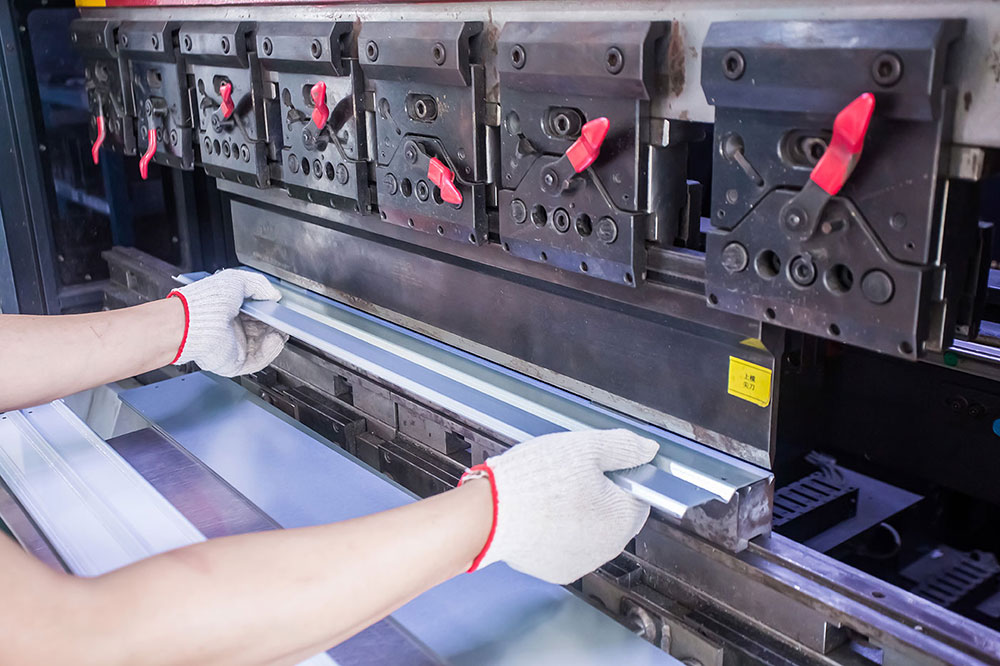
Sheet Metal Bending is a metal forming process that permanently deforms a flat metal sheet into a specific angle or shape without removing material. Using a press brake and precision tooling, manufacturers create V-shaped, U-shaped, box-shaped, or custom profiles for thousands of industrial applications.
The ideal bending process depends on:
Selecting the right bending method helps reduce production errors, improve product consistency, and lower manufacturing costs.
Air bending is the most widely used Sheet Metal Bending method because it offers excellent flexibility and lower tooling costs. During the process, the punch presses the sheet into a V-die without forcing it completely into the bottom.
Advantages
The trade-off is that air bending experiences more springback, requiring experienced operators and accurate angle compensation.
Bottom bending forces the sheet firmly against the die, producing higher dimensional accuracy than air bending.
Benefits include:
Although tooling costs are slightly higher, bottom bending is often preferred for precision industrial components.
Coining applies extremely high pressure to plastically deform the material.
Characteristics include:
Because coining requires significantly higher tonnage and tooling wear, it is mainly used for parts demanding extremely tight tolerances.
Rotary bending creates smooth curved profiles while protecting visible surfaces from scratches, making it ideal for decorative or architectural components.
Wipe bending forms flanges efficiently but may leave slight surface marks if tooling is not properly maintained.
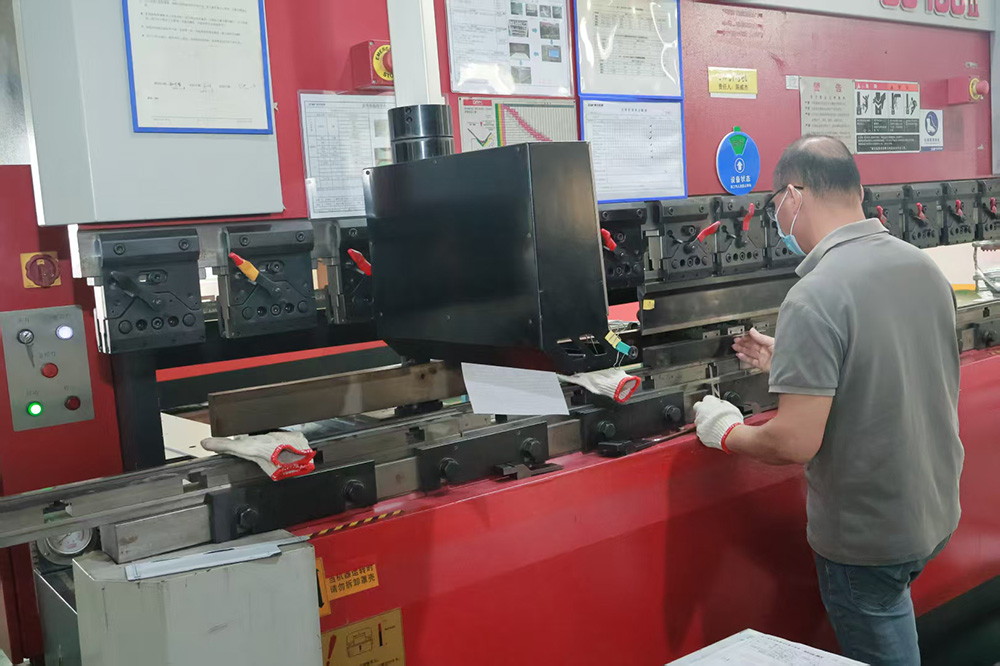
Springback is one of the biggest challenges in Sheet Metal Bending. After bending pressure is released, the material naturally attempts to return toward its original shape due to internal elastic stress.
Several factors influence springback:
Manufacturers usually compensate by intentionally over-bending the part. Accurate springback prediction requires engineering experience, material knowledge, and process validation through trial production.
During Sheet Metal Bending, the outer surface stretches while the inner surface compresses. As a result, the flat blank length differs from the final part dimensions.
This difference is known as bending allowance.
A proper bending allowance calculation considers:
Accurate calculations prevent assembly problems, reduce material waste, and ensure that finished parts meet design specifications.
Material selection greatly affects bending quality.
Common materials include:
Each material responds differently to deformation, so experienced manufacturers adjust tooling and bending parameters accordingly.
SHENGWO MACHINERY specializes in precision Sheet Metal Bending, custom sheet metal fabrication, CNC machining, HVAC dampers, electrical enclosures, and retail display systems for global OEM customers.
Our advantages include:
We combine advanced CNC equipment, precision press brakes, and experienced engineers to deliver consistent bending accuracy, faster lead times, and competitive manufacturing costs.
Successful Sheet Metal Bending requires much more than simply forming metal. Understanding different bending methods, controlling springback, calculating bending allowance, and selecting suitable materials are essential for producing reliable, high-quality components.
By partnering with an experienced manufacturer, buyers can reduce production risks, improve product consistency, and shorten project lead times.
1. What is the most common Sheet Metal Bending method?
Air bending is the most widely used method because it offers flexibility, lower tooling costs, and efficient production.
2. Why does springback occur?
Springback occurs because metal partially recovers its original shape after the bending force is removed.
3. Which material is easiest to bend?
Aluminum 5052 and low carbon steel generally provide excellent bendability for most applications.
4. Why is bending allowance important?
It ensures accurate flat-pattern calculations so finished parts match the required dimensions after bending.
5. How do I choose the right Sheet Metal Bending supplier?
Look for manufacturers with ISO-certified quality systems, advanced equipment, engineering expertise, and proven OEM experience.
Looking for a reliable Sheet Metal Bending partner for your next project?
Whether you need custom HVAC dampers, electrical enclosures, retail shelving, or precision sheet metal components, SHENGWO MACHINERY provides engineering support, strict quality control, and dependable OEM manufacturing services.
Send us your drawings today and receive a fast quotation with professional manufacturing recommendations.
No. 8803 Zhuhai Road, LianWan Industry Park, Jinwan District, 519090 Zhuhai, Guangdong, China