.png)




Author | SHENGWO Industry Insights Team
Updated | August 2026
Contents
Aluminum is one of the most widely used materials in modern CNC manufacturing because of its low density, excellent machinability, corrosion resistance, and favorable strength-to-weight ratio. It is widely used in aerospace, automotive, electronics, automation, medical equipment, and industrial machinery.
However, aluminum parts—especially thin-wall, thin-plate, deep-pocket, and complex-shaped components—can easily deform during CNC machin. For manufacturers and buyers, this can result in dimensional deviations, poor surface quality, assembly problems, and increased rejection rates.
So, what causes aluminum parts to deform during machining, and how can the problem be controlled?
A reliable custom cnc machining services provider should not simply adjust the machine after deformation occurs. Instead, the material, tooling, clamping method, machining sequence, and cutting parameters should be considered together before production begins.
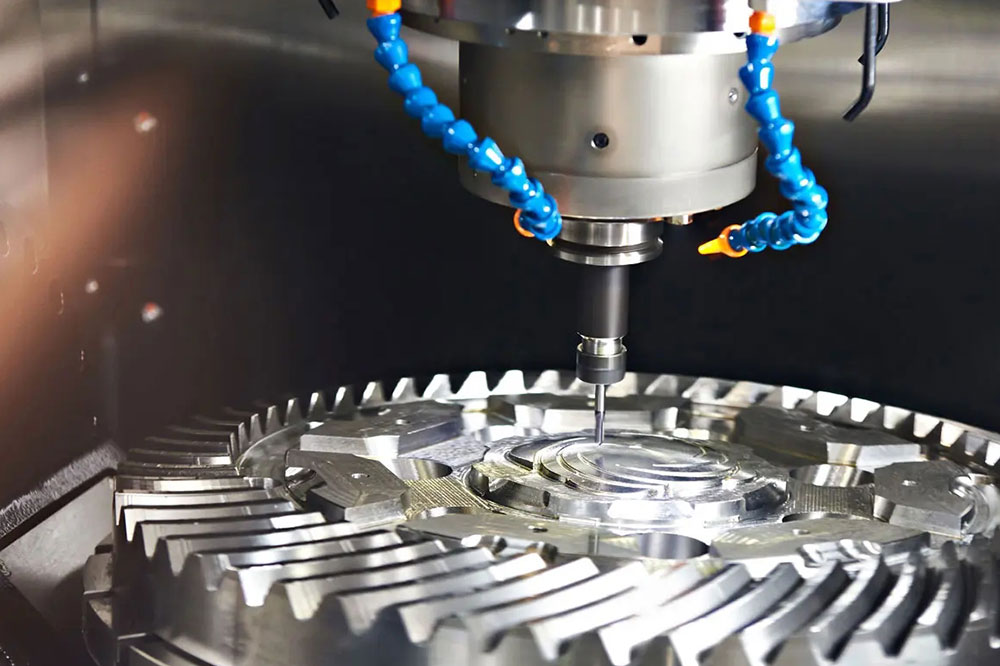
Aluminum has a relatively high coefficient of thermal expansion and is generally softer than steel. These characteristics make it easy to machine, but they also make certain aluminum components more sensitive to machining forces and temperature changes.
The most common causes of deformation include:
For example, a thin aluminum wall may remain dimensionally accurate while clamped on the machine but spring outward or inward after the fixture is released. This is why experienced custom cnc machining services manufacturers need to consider the condition of the part both during and after machining.
Internal stress is one of the most overlooked causes of aluminum machining deformation.
Aluminum blanks,
Several approaches can help reduce this risk:
Natural or artificial aging: Depending on the material and blank condition, aging can help stabilize the material before precision machining.
Vibration or other stress-relief treatments: These may be considered for suitable applications where residual stress is a concern.
Pre-machining: When the initial blank has a large machining allowance, removing material in an earlier operation can reduce the remaining allowance and allow some deformation to occur before final machining.
A practical machining strategy is therefore:
Raw material → Stress relief/pre-machining → Rough machining → Stabilization → Semi-finishing → Finishing
Tool selection plays an important role in controlling deformation during aluminum CNC machining. The geometry, material, sharpness, and condition of the cutting tool directly affect cutting force, heat generation, chip evacuation, surface finish, and dimensional stability.
For aluminum parts, especially thin-wall or complex components, the goal is to achieve efficient material removal while keeping cutting forces and heat generation under control. A professional custom CNC machining services provider should select tooling according to the aluminum alloy, part geometry, machining stage, and required tolerances.
The rake angle affects how the cutting edge enters the aluminum material and how chips flow away from the cutting zone.
A suitable positive rake angle can help create a sharp cutting action, reduce cutting resistance, and improve chip evacuation. This can be particularly useful when machining aluminum because aluminum tends to produce continuous and relatively large chips.
However, the rake angle should not simply be increased as much as possible. Excessive rake angles may reduce cutting-edge strength. Therefore, the optimal geometry should be determined according to the aluminum alloy, cutting conditions, tool diameter, and machining requirements.
The clearance angle helps prevent unnecessary contact between the tool flank and the machined surface.
During rough machining, the tool needs sufficient strength to withstand higher cutting loads. During finishing, an appropriate clearance angle can help reduce friction and improve surface quality.
For thin-wall aluminum parts, controlling friction is particularly important because excessive cutting pressure can contribute to vibration and dimensional deformation.
The helix angle influences cutting smoothness, chip evacuation, and cutting forces.
For aluminum machining, tools designed with efficient chip evacuation are often preferred because aluminum can generate long or relatively large chips. Adequate flute space helps prevent chip accumulation and recutting, which can otherwise increase cutting heat and damage the machined surface.
The number of cutting edges should also be selected according to the tool diameter, spindle speed, feed rate, and required material removal rate. The objective is to maintain stable cutting rather than simply maximizing the number of flutes.
Tool sharpness is another important factor in custom CNC machining services. A sharp cutting edge can reduce cutting resistance and minimize unnecessary heat generation.
As the tool becomes worn, cutting forces and friction increase. This may lead to:
For precision aluminum components, tool wear should therefore be monitored throughout production. Replacing or reconditioning tools at an appropriate stage helps maintain consistent machining quality between parts and production batches.
Ultimately, the best tool is not necessarily the most expensive or most aggressive tool. It is the tool whose geometry and cutting performance match the material, component design, and manufacturing requirements.
For example, a rigid aluminum block may tolerate more aggressive roughing parameters, while a thin-wall enclosure or precision aluminum housing may require lighter cutting passes, optimized tooling, and additional support.
This is why experienced custom CNC machining services manufacturers evaluate tooling as part of the overall machining strategy rather than treating it as an isolated production decision.
A sharp tool does more than improve surface finish—it also helps control deformation.
As a cutting tool wears:
For this reason, professional custom cnc machining services should establish appropriate tool-life management rather than using a tool indefinitely.
Tool condition should be monitored according to the material, cutting parameters, tool type, production volume, and required tolerance.
For high-volume OEM production, standardized tool replacement criteria can also improve consistency between batches.
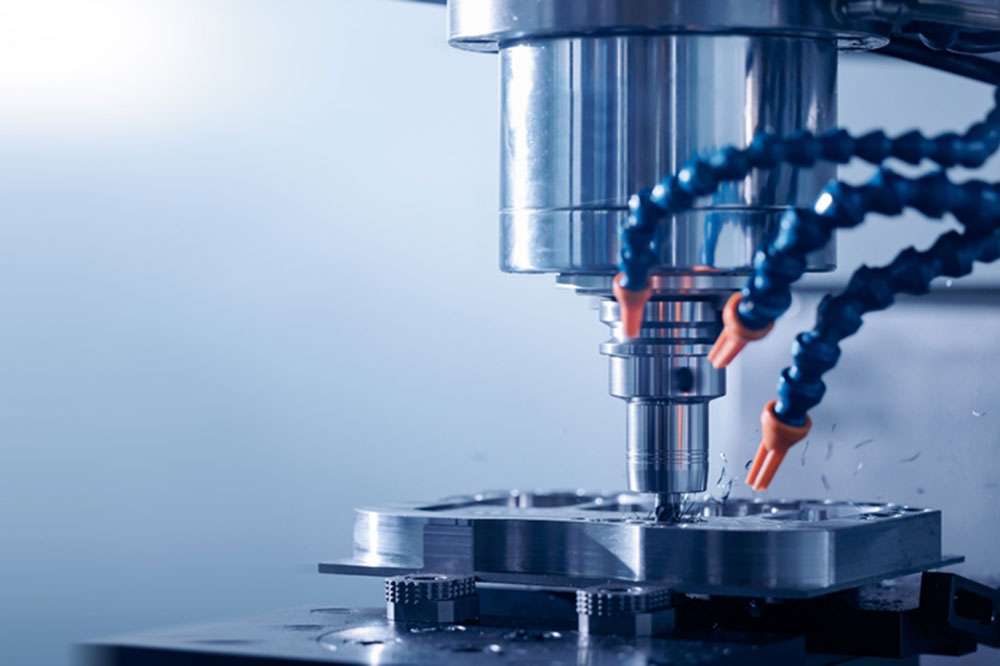
Clamping is another major source of deformation, especially for thin-wall aluminum parts.
If excessive clamping pressure is applied to a flexible component, the workpiece may deform during machining. When the fixture is released, the part can partially return toward its original shape.
For thin or flexible aluminum components, manufacturers may consider:
The principle is simple: hold the workpiece securely without unnecessarily distorting it.
For example, when machining a thin aluminum plate, evenly distributed vacuum clamping can sometimes provide more uniform support than concentrated mechanical clamping.
For complex parts, a customized fixture may provide better rigidity and repeatability than a standard fixture.
Even with good tooling and clamping, the wrong machining sequence can cause deformation.
Removing too much material from one side of a component can release internal stress and change its structural rigidity.
A common strategy is to divide machining into several stages:
The objective is to remove most of the excess material efficiently while leaving sufficient stock for later operations.
The remaining material is reduced while allowing the component to stabilize before final machining.
Only a controlled and relatively small amount of material is removed. This allows the finishing tool to work under more stable conditions.
For high-precision parts, it can also be beneficial to allow the component to cool and stabilize between major machining stages.
A typical process may therefore be:
Roughing → Cooling/Stabilization → Semi-finishing → Inspection → Finishing → Final Inspection
This process is especially important when customers require tight tolerances or thin structural walls.
Cutting speed, feed rate, depth of cut, tool geometry, and coolant strategy all influence machining deformation.
If cutting conditions are too aggressive, cutting forces and heat may increase. If they are too conservative, machining efficiency may decrease and chip evacuation can become problematic.
There is therefore no universal cutting parameter suitable for every aluminum component.
A professional custom cnc machining services provider should consider:
The machining parameters used for a rigid aluminum block should not simply be copied to a thin-wall enclosure or precision aerospace component.
Machining deformation is ultimately a dimensional problem.
A component may meet its dimensions while mounted on the machine but fail inspection after removal from the fixture. This is why final inspection should be performed under controlled conditions.
Important inspection activities may include:
For demanding OEM projects, inspection records can also provide traceability and help identify process trends.
Not all aluminum alloys behave identically during machining.
Different grades have different combinations of:
For example, aluminum 5052 is commonly valued for its formability, while 6061 offers a useful balance of machinability, strength, and availability. Higher-strength alloys may provide different machining characteristics and require different tooling and process strategies.
Therefore, material selection should be based on the actual application rather than simply choosing the lowest-cost aluminum alloy.
A reliable custom cnc machining services supplier can review the drawing and application requirements before production to determine whether the specified material and machining process are practical.
SHENGWO MACHINERY provides custom cnc machining services for international OEM customers requiring customized aluminum and metal components.
Our manufacturing capabilities include CNC machining, precision sheet metal fabrication, laser cutting, bending, welding, surface treatment, and assembly. This integrated capability allows customers to obtain multiple manufacturing processes from one supplier.
For aluminum CNC projects, our approach focuses on more than simply producing parts according to drawings. We consider:
SHENGWO MACHINERY operates under ISO 9001 Quality Management System and ISO 14001 Environmental Management System, certified by a UKAS-accredited certification body.
Our manufacturing experience has also been recognized within the Schneider Electric supply chain, including:
These recognitions reflect our focus on quality management, production consistency, and continuous manufacturing improvement.
Q1:Can you machine thin-wall aluminum parts?
Yes. Thin-wall aluminum parts can be manufactured, but the machining strategy needs to account for wall thickness, rigidity, clamping force, tooling, and machining sequence.
Q2:How can I prevent aluminum parts from deforming?
The most important factors are reducing residual stress, optimizing cutting parameters, using suitable tooling, controlling clamping force, and arranging the machining sequence properly.
Q3:Which aluminum alloys can you CNC machine?
Common CNC-machined aluminum alloys include 5052, 6061, 6063, 6082, and 7075. The most suitable grade depends on the mechanical, dimensional, corrosion, and application requirements.
Q4:Can SHENGWO review my drawings before production?
Yes. Customers can provide drawings, 3D models, specifications, material requirements, quantities, and surface treatment requirements. Our engineering team can review the project and recommend a suitable manufacturing process.
Q5:Do you support OEM production?
Yes. SHENGWO MACHINERY supports customized OEM/ODM production based on customer drawings and project requirements, from prototypes and small batches to repeat production programs.
Aluminum deformation during CNC machining is rarely caused by one single factor. Material condition, internal stress, tool geometry, cutting force, heat, clamping, machining sequence, and inspection all work together to determine the final result.
For buyers, choosing experienced custom cnc machining services can significantly reduce dimensional problems, rework, production delays, and batch-to-batch inconsistencies.
The right manufacturing partner should not only have CNC equipment. They should understand how to control the entire machining process from drawing review to final inspection.
Have an aluminum CNC machining project?
Our engineering team can review your requirements and provide a practical manufacturing solution and quotation for your project.
No. 8803 Zhuhai Road, LianWan Industry Park, Jinwan District, 519090 Zhuhai, Guangdong, China