.png)



Author | SHENGWO Industry Insights Team
Updated | November 2026
Contents
Metal laser cutting is widely used in modern manufacturing because it offers high cutting speed, good dimensional accuracy, and flexibility for producing complex sheet metal components. From industrial equipment enclosures and HVAC dampers to supermarket shelving and custom metal structures, laser cutting is often one of the first steps in the fabrication process.
However, a precise laser cut involves more than simply following a CAD drawing.
Burr formation, heat effects, small-hole distortion, and rough cut edges can all affect the quality of finished parts. If these issues are not identified before production, they may lead to additional deburring, dimensional deviations, assembly difficulties, and unnecessary manufacturing costs.
For OEM buyers and engineering teams, understanding these risks is essential when selecting a metal laser cutting supplier.
In this guide, we will examine four common metal laser cutting risks and explain how to prevent them before moving into batch production.
Metal laser cutting uses a focused laser beam to melt or vaporize material along a programmed cutting path. An assist gas helps remove molten material from the cutting area, producing the required profile.
The final cutting quality depends on several factors, including:
Even when two parts are produced from the same drawing, unsuitable cutting parameters can result in different edge conditions and dimensional accuracy.
For components that require further bending, welding, coating, or assembly, cutting quality is particularly important. A defect created during the first manufacturing operation may affect every subsequent process.
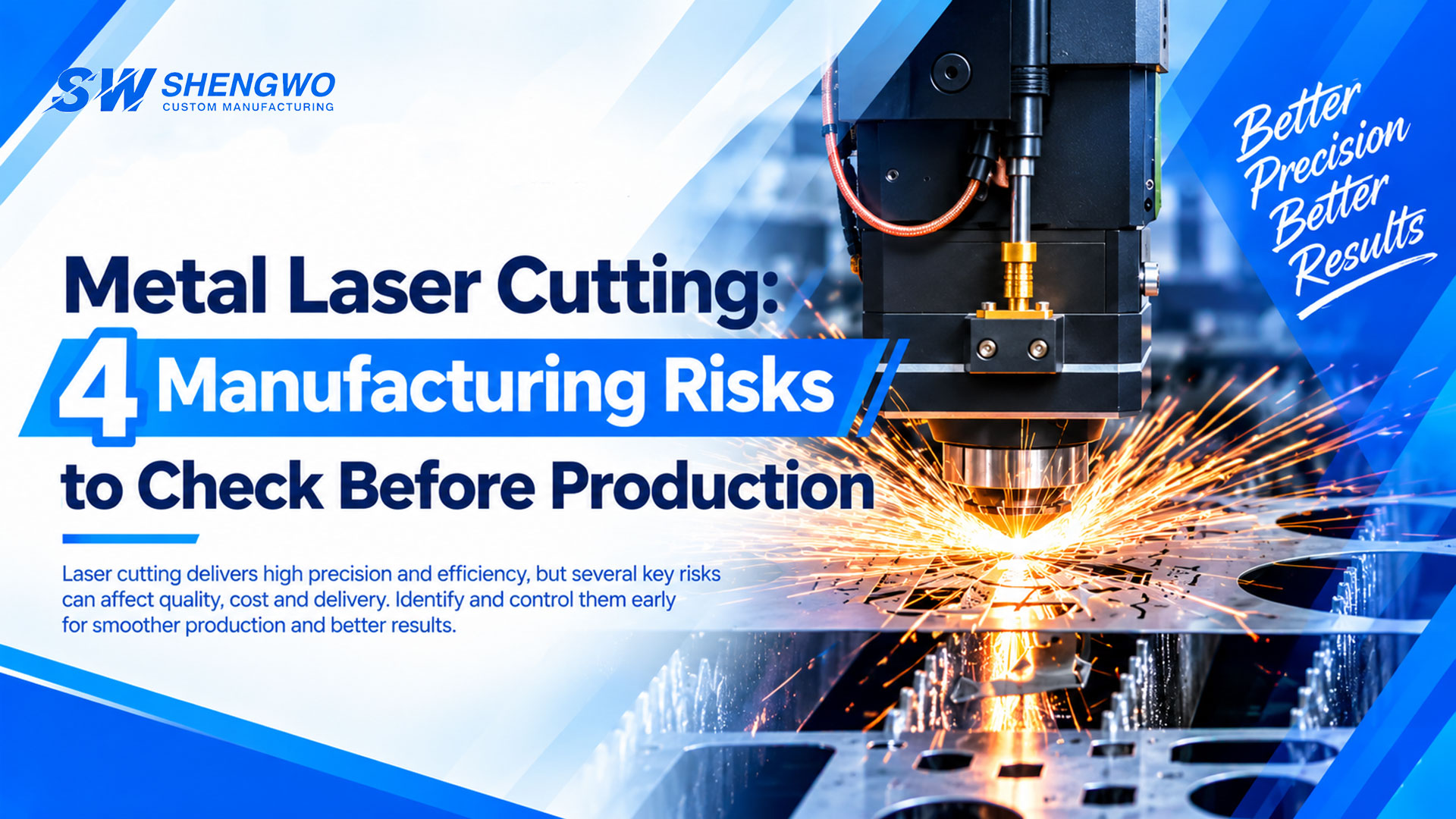
Burr formation is one of the most common issues in metal laser cutting.
Burrs are unwanted raised edges or solidified material that remain along the cut surface. They can appear as small sharp projections or accumulated molten material, depending on the material, thickness, and cutting conditions.
Excessive burr formation may be caused by:
When molten material is not effectively removed from the cutting kerf, it may solidify along the lower edge of the workpiece.
Burrs are not simply a cosmetic issue. They can create practical problems during later production stages.
For example:
Manufacturers should select suitable cutting parameters based on material type and thickness, maintain the condition of nozzles, and monitor assist gas performance.
For parts with strict edge requirements, deburring standards should be clearly defined before production.
Buyers should also specify whether sharp edges must be removed, whether all cut edges require deburring, and what level of residual burr is acceptable.
During metal laser cutting, concentrated heat is applied to a relatively small area. Although the cutting process is localized, the material surrounding the cut may still experience thermal effects.
This area is commonly referred to as the heat-affected zone (HAZ).
The thermal condition near a cut depends on several factors:
Different metals respond differently to laser cutting. The thermal effects on stainless steel, carbon steel, and aluminum are not necessarily the same.
Depending on the material and application, excessive or inconsistent heat input may contribute to:
For example, visible discoloration on stainless steel may require additional cleaning or surface treatment when appearance or corrosion performance is important.
For precision components, thermal distortion may also affect the accuracy of subsequent bending or assembly operations.
To control heat-related issues, manufacturers should:
For components with demanding surface or dimensional requirements, thermal effects should be considered during the engineering review rather than after mass production begins.
Small holes are commonly found in sheet metal components used for mounting, fastening, ventilation, and mechanical connections.
Although laser cutting can produce complex holes and openings, very small features require careful process planning.
When the hole diameter is too small relative to the material thickness, the laser may have insufficient space to maintain a stable cutting process.
Other contributing factors include:
These factors may cause holes to become oval, tapered, oversized, undersized, or inconsistent.
Small-hole distortion can create problems that are not always visible during a basic visual inspection.
For example:
For electrical enclosures, equipment brackets, and custom shelving components, hole accuracy can directly affect installation and assembly efficiency.
Before production, engineers should review the relationship between hole diameter, material thickness, and required tolerance.
Recommended practices include:
A useful design principle is to evaluate small holes according to their actual function. If a hole is used for precision positioning or fastening, its tolerance should be clearly specified on the drawing.
A good laser-cut edge should be consistent with the material, thickness, and specified quality requirements.
Rough cut edges may show visible striations, excessive dross, uneven surfaces, or inconsistent cut profiles.
Common causes include:
The cutting direction and geometry can also influence the final edge condition.
For example, thick materials and complex contours may require different parameter settings from thin sheet metal.
Rough cut edges can affect more than the appearance of a component.
Potential consequences include:
For supermarket shelving, electrical panels, and equipment enclosures, edge quality may be especially important when components have visible surfaces or require close-fitting connections.
Manufacturers should establish suitable cutting parameters for each material and thickness, regularly inspect consumables, and verify the first cut before continuing with batch production.
For parts requiring further processing, the cutting quality should also be evaluated in relation to the next manufacturing operation.
For example, edges that will be welded may require different preparation from edges that will remain visible after powder coating.
Identifying potential problems before production is more efficient than correcting defects after an entire batch has been processed.
Before approving a metal laser cutting project, buyers and manufacturers should review the following points:
| Inspection Item | What to Confirm |
|---|---|
| Material | Material grade, thickness, and surface condition |
| Drawing | CAD file accuracy, dimensions, and revision number |
| Cutting tolerance | Critical dimensions and acceptable deviations |
| Hole requirements | Minimum hole diameter, position, and tolerance |
| Edge quality | Acceptable roughness, dross, and burr condition |
| Deburring | Whether sharp edges or all cut edges require treatment |
| Surface requirements | Whether discoloration or oxidation is acceptable |
| Secondary processes | Bending, welding, coating, machining, or assembly requirements |
| First-article inspection | Whether a sample or first-piece approval is required |
A clear technical agreement helps prevent misunderstandings between the buyer and manufacturer.
It also allows the supplier to evaluate manufacturability, identify potential risks, and recommend adjustments before mass production.
Selecting a metal laser cutting manufacturer should involve more than comparing cutting prices.
A reliable supplier should understand how laser cutting connects with the complete fabrication process.
Here are five important factors to evaluate.
Confirm whether the manufacturer has suitable equipment and process experience for your required materials and thicknesses.
Different materials require different cutting conditions, so equipment power alone does not determine cutting quality.
A capable supplier should review drawings before production, identify difficult features, and communicate potential manufacturing risks.
This is particularly important for components with small holes, tight tolerances, complex contours, or multiple bending operations.
Ask how the supplier manages cutting parameters, equipment maintenance, first-piece inspection, and batch consistency.
Stable process control is essential for repeat OEM orders.
Laser cutting is often only the first step in a larger manufacturing project.
If your parts also require CNC bending, welding, grinding, surface finishing, or assembly, working with a supplier that can coordinate these processes may simplify communication and production management.
A reliable manufacturer should understand your acceptance criteria and provide clear communication when technical issues arise.
For customized projects, timely engineering feedback can help prevent costly production changes.
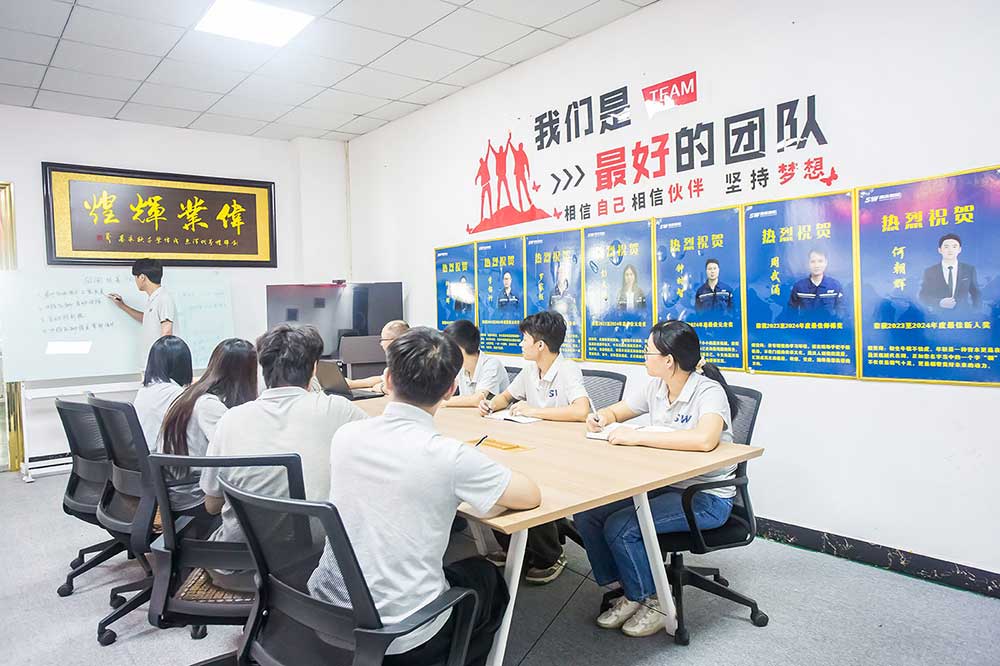
SHENGWO MACHINERY is a custom metal fabrication and CNC machining manufacturer based in Zhuhai, China. We support OEM and ODM projects for customers who require customized metal components and complete fabrication solutions.
Our manufacturing services cover multiple processes, including:
We manufacture customized products for applications such as:
With a manufacturing facility of approximately 3,000 m² and an ERP-based production management system, SHENGWO coordinates engineering review, manufacturing, and delivery processes to support project traceability and production control.
We understand that every OEM project has different requirements. Our team can review your drawings, discuss material and process options, and evaluate manufacturing details before production.
Our goal is not simply to cut metal according to a drawing, but to help customers turn technical requirements into manufacturable and consistent products.
Q1. What Materials Can Be Used for Metal Laser Cutting?
Common materials include carbon steel, stainless steel, galvanized steel, and aluminum. The actual material and thickness range depends on the laser equipment, cutting parameters, and required edge quality.
Q2. What Causes Burrs in Laser Cutting?
Burrs may result from unsuitable cutting speed, laser power, focus position, assist gas pressure, or nozzle condition. Proper parameter optimization and equipment maintenance help reduce burr formation.
Q3. Can Laser Cutting Produce Small and Precise Holes?
Yes, but hole accuracy depends on the hole diameter, material thickness, geometry, and cutting conditions. For very small holes or tight tolerances, drilling, punching, or secondary machining may be more suitable.
Q4. Does Metal Laser Cutting Affect the Material?
Laser cutting introduces localized heat. Depending on the material and process parameters, the surrounding area may experience thermal effects, oxidation, or distortion. Appropriate cutting conditions help control these effects.
Q5. What Files Should I Provide for a Custom Laser Cutting Quote?
You can provide DXF or DWG files for 2D profiles, along with PDF drawings for dimensions and technical requirements. For more complex components, 3D files such as STEP or STP can also help engineers understand the structure.
It is also useful to include material grade, thickness, tolerances, edge requirements, surface treatment, and estimated order quantity.
Q6. Is Laser Cutting Enough to Complete a Sheet Metal Part?
Not always. Many custom components require additional operations such as CNC bending, welding, grinding, surface finishing, or assembly. The required process route depends on the component design and application.
Metal laser cutting is an important process in modern sheet metal manufacturing, but cutting accuracy alone does not guarantee a reliable finished component.
Burr formation, heat-affected edges, small-hole distortion, and rough cut edges are four manufacturing risks that should be evaluated before production begins.
By reviewing drawings, confirming material specifications, defining edge quality requirements, and conducting first-article inspections, buyers and manufacturers can reduce avoidable defects and improve production consistency.
At SHENGWO MACHINERY, we support custom sheet metal fabrication and CNC machining projects, from engineering review and laser cutting to bending, welding, finishing, and inspection.
Have a custom metal laser cutting project?
Send us your drawings and project requirements. Our team will review the manufacturing details and provide feedback and a quotation.
No. 8803 Zhuhai Road, LianWan Industry Park, Jinwan District, 519090 Zhuhai, Guangdong, China