.png)

Author | SHENGWO Industry Insights Team
Updated | November 2026
Contents
For custom sheet metal products, surface finishing is more than a cosmetic decision. It directly affects product durability, corrosion resistance, appearance, and long-term performance.
Among the available metal finishing methods, powder coating for sheet metal is widely used in industrial manufacturing because it provides a durable finish with flexible appearance options.
From electrical enclosures and industrial cabinets to supermarket shelving and custom HVAC components, powder coating helps manufacturers achieve a consistent surface finish while adding an additional layer of protection.
But what makes powder coating a suitable choice for sheet metal products? How does the process work, and what should buyers consider before placing an OEM order?
In this guide, we explore four key benefits of powder coating and the manufacturing details that can influence final coating quality.
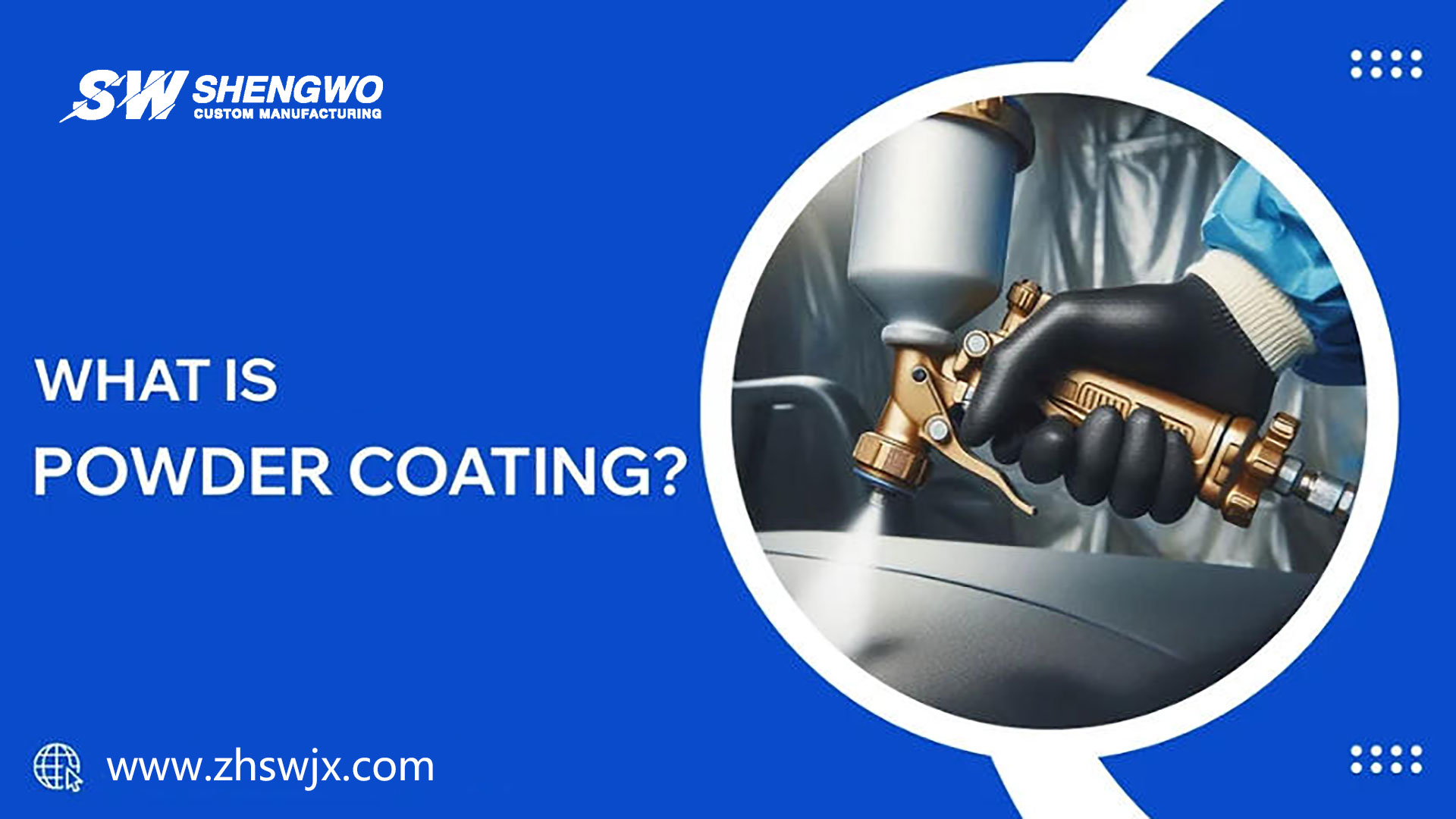
Powder coating is a dry finishing process in which finely ground coating material is applied to a metal surface and then cured under controlled heat.
Unlike conventional liquid paint, powder coating does not rely on a liquid solvent carrier. During application, powder particles are typically electrostatically charged and attracted to a grounded metal component.
After application, the coated part enters a curing oven. Under the specified time and temperature conditions, the powder melts, flows, and forms a continuous coating film.
Step 1: Surface Preparation
The metal surface is cleaned to remove oil, dust, rust, and other contaminants. Depending on the material and coating specification, pretreatment may include degreasing, rinsing, chemical conversion coating, or abrasive preparation.
Proper surface preparation is essential because contamination can reduce coating adhesion and affect corrosion performance.
Step 2: Powder Application
Powder is applied using an electrostatic spray gun. The charged powder particles are attracted to the grounded metal surface, helping create an even coating layer.
The application process should be controlled to achieve the required coating coverage and thickness.
Step 3: Oven Curing
The coated component is heated in a curing oven according to the powder manufacturer’s specifications.
The curing temperature and time must be appropriate for the coating chemistry, part thickness, and actual part temperature—not simply the oven’s displayed temperature.
Step 4: Quality Inspection
After curing and cooling, the finished part is inspected according to the project requirements.
Typical checks may include visual appearance, coating thickness, adhesion, color consistency, and surface defects.
One of the main reasons manufacturers choose powder coating is its ability to provide an additional protective barrier against environmental exposure.
A properly applied and cured coating can help reduce direct contact between the metal substrate and moisture or other corrosive elements.
This is particularly useful for products such as:
Electrical enclosures
Industrial cabinets
Metal shelving systems
Equipment frames
Custom HVAC components
However, corrosion protection does not depend on the coating alone. Material selection, surface pretreatment, coating chemistry, film thickness, and the operating environment all influence the final result.
For example, products used in humid or outdoor environments may require more specific coating systems and pretreatment requirements than components used indoors.
What Buyers Should Check: Confirm the intended operating environment and ask the manufacturer to specify the coating system, pretreatment process, and required coating thickness.
Sheet metal products are often exposed to handling, installation, friction, and everyday wear.
A suitable powder coating can provide good resistance to abrasion, impact, and surface wear, helping maintain the product’s appearance during normal use.
This is especially important for supermarket shelving, industrial equipment cabinets, and frequently handled metal components.
Compared with an unfinished metal surface, a properly selected powder coating can also make the product easier to maintain and help protect the underlying substrate.
However, coating performance varies depending on powder formulation, curing conditions, film thickness, and application quality.
What Buyers Should Check: Discuss the expected handling conditions and service environment before selecting a coating. For demanding applications, specify the required performance tests rather than relying only on general claims such as “scratch-resistant.”
Powder coating offers a wide range of appearance options, making it suitable for both functional and decorative metal products.
Depending on the powder system, buyers can select different:
Colors
Gloss levels
Surface textures
Smooth or textured finishes
Matte, satin, or glossy appearances
For example, electrical enclosures may require a clean, professional finish, while supermarket shelving may need to match a specific retail brand color.
A consistent finish across multiple components can also help create a more unified product appearance.
What Buyers Should Check: Provide a recognized color reference, such as a RAL color code, where applicable. For appearance-critical projects, approve a physical sample before mass production.
For OEM buyers, consistency across production batches is often just as important as the appearance of an individual part.
A controlled powder coating process helps manufacturers reproduce the specified finish across repeated orders.
Consistency depends on several manufacturing factors:
Stable surface pretreatment.
Controlled powder application.
Appropriate curing conditions.
Consistent coating thickness.
Regular equipment and process checks.
Defined inspection and acceptance criteria.
For projects involving multiple sheet metal components, consistent coating quality helps maintain a uniform appearance after final assembly.
What Buyers Should Check: Establish coating specifications and inspection criteria before mass production. Retaining approved color and finish samples can help compare quality across future orders.
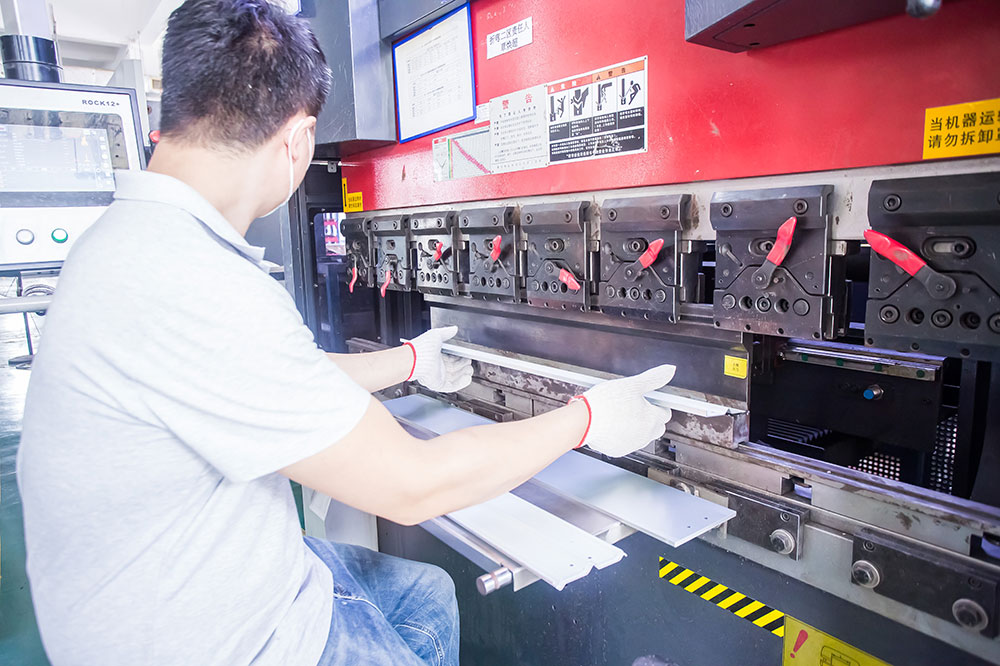
Powder coating is used across a wide range of industrial and commercial sheet metal products.
Electrical enclosures often require a consistent surface finish and protection against environmental exposure. Powder coating can provide a durable external finish, subject to the enclosure’s material, design, and environmental requirements.
Custom retail shelving needs a uniform appearance across multiple shelves, brackets, uprights, and supporting structures. Powder coating offers flexible color and finish options to meet different retail display requirements.
Industrial cabinets and equipment frames may experience regular handling and exposure to workshop or factory environments. A suitable coating system can help maintain surface appearance and protect the metal substrate.
Certain HVAC sheet metal components, including housings, frames, and selected damper assemblies, may use powder coating to achieve the required appearance and surface protection.
The coating specification should be selected according to the component’s operating conditions and functional requirements.
Although powder coating offers several advantages, selecting the right coating system requires more than choosing a color.
Before starting production, buyers and manufacturers should clarify the following details.
| Consideration | What to Confirm |
|---|---|
| Base material | Carbon steel, galvanized steel, aluminum, or stainless steel |
| Surface preparation | Cleaning, degreasing, pretreatment, and surface condition |
| Coating thickness | Required dry film thickness according to the specification |
| Color | RAL code or approved physical sample |
| Surface appearance | Matte, gloss, satin, smooth, or textured |
| Operating environment | Indoor, outdoor, humid, or corrosive conditions |
| Quality requirements | Appearance, adhesion, thickness, and relevant performance tests |
Even a high-quality powder coating may fail if the substrate is not properly prepared.
Oil, dust, oxidation, or other contaminants can affect coating adhesion and lead to defects such as peeling, blistering, or uneven coverage.
This is why surface preparation should be treated as an essential part of the coating process rather than a minor preliminary step.
Coating thickness can influence appearance, coverage, and protective performance.
However, a thicker coating is not always better. Excessive thickness may affect fit, dimensions, edge coverage, or the appearance of certain components.
The required thickness should be defined according to the coating manufacturer’s recommendations and the customer’s application requirements.
Insufficient or excessive curing can affect coating performance and appearance.
Manufacturers should follow the powder manufacturer’s curing specifications and control the actual temperature experienced by the part.
For thicker or more complex metal components, heating behavior may differ from that of thin sheet metal parts.
A reliable powder coating process should include inspection after curing.
Depending on the project specification, common inspection items include:
1. Visual Appearance
Check for visible defects such as pinholes, bubbles, orange peel, scratches, contamination, and uneven coverage.
2. Coating Thickness
Use a suitable coating thickness gauge to verify that the coating meets the specified thickness range.
3. Adhesion
Adhesion testing, such as a cross-cut test where appropriate, can help evaluate how well the coating is bonded to the substrate.
4. Color and Gloss Consistency
Compare the finished product with the approved color sample or specified color reference.
5. Functional Fit
Check whether coating thickness affects holes, threaded areas, mating surfaces, or assembly interfaces.
Not every project requires the same inspection methods. The inspection plan should be agreed upon according to the product’s application, customer specifications, and applicable standards.
At SHENGWO MACHINERY, surface finishing is an important consideration in our custom sheet metal manufacturing process.
We manufacture custom metal products for OEM customers, including:
Supermarket shelving and retail display structures
HVAC dampers and related sheet metal components
Electrical panels and equipment enclosures
Custom sheet metal brackets and frames
Other industrial metal components
From engineering drawing review and laser cutting to CNC bending, welding, surface treatment, and final inspection, we focus on coordinating manufacturing details throughout the production process.
For projects requiring powder coating, important considerations include material compatibility, surface preparation, coating specifications, appearance requirements, and final assembly dimensions.
Our approach is to review these requirements early so that the selected finishing process supports the product’s intended function and appearance.
Whether you need a small batch of custom sheet metal components or a repeat OEM production order, clear drawings and finishing specifications help us evaluate your project more accurately.
Q1:What is powder coating for sheet metal?
Powder coating for sheet metal is a dry finishing process in which electrostatically applied powder is cured under heat to form a continuous protective and decorative coating on metal components.
Q2: Is powder coating better than traditional paint?
Powder coating offers advantages such as good durability, a wide range of finishes, and a solvent-free application process. However, the best option depends on the substrate, product design, coating requirements, operating environment, and repair needs.
Q3:Does powder coating prevent rust?
Powder coating can help protect suitable metal substrates from moisture and environmental exposure by forming a protective barrier. However, it does not make every metal component rust-proof. Surface preparation, coating integrity, material selection, and environmental conditions all affect corrosion performance.
Q4:What materials can be powder coated?
Common substrates include carbon steel, galvanized steel, and aluminum. Stainless steel can also be powder coated with suitable surface preparation and coating systems. Material compatibility should be confirmed before production.
Q5:How thick should a powder coating be?
There is no single thickness suitable for every application. The required coating thickness depends on the powder system, substrate, product geometry, and customer specifications. Buyers should define the acceptable thickness range before production.
Q6:Can powder coating be used for outdoor sheet metal products?
Yes. Suitable powder coating systems can be used for outdoor metal products. However, the coating chemistry, pretreatment, corrosion requirements, UV exposure, and environmental conditions should be considered when selecting the system.
Q7:Can SHENGWO MACHINERY manufacture custom powder-coated sheet metal parts?
SHENGWO MACHINERY supports custom sheet metal manufacturing for OEM applications, including shelving, HVAC dampers, electrical enclosures, and metal structures. Buyers can submit drawings and surface finishing requirements for manufacturing review and quotation.
Powder coating for sheet metal offers more than an attractive surface finish. It can improve corrosion protection, provide a durable finish, create flexible appearance options, and support consistent quality across repeat OEM orders.
However, the final result depends on more than the coating material itself. Proper surface preparation, application control, curing conditions, and quality inspection are all essential.
For buyers sourcing custom sheet metal products, defining coating requirements early can help reduce finishing issues and ensure that the final components meet both functional and appearance expectations.
Planning a custom sheet metal project?
Send SHENGWO MACHINERY your drawings, 3D STEP files, material specifications, surface finishing requirements, and estimated quantities for a manufacturing review and quotation.
SHENGWO MACHINERY — From Your Drawings to Reliable Manufactured Parts.
No. 8803 Zhuhai Road, LianWan Industry Park, Jinwan District, 519090 Zhuhai, Guangdong, China