.png)

Author | SHENGWO Industry Insights Team
Updated | August 2026
Contents
In modern manufacturing, precision, repeatability, efficiency, and flexibility are critical to project success. As global OEM buyers demand increasingly accurate components and shorter production cycles, manufacturers need cutting technologies that can deliver consistent results without unnecessarily increasing production costs.
From electrical enclosures and industrial equipment to automotive components, HVAC parts, brackets, and customized sheet metal assemblies, the Laser cutting process has become an important manufacturing solution for high-precision applications.
But why has laser cutting become such a preferred option compared with traditional cutting methods?
This guide explains the key advantages of the Laser cutting process, what buyers should consider when selecting a laser cutting supplier, and how SHENGWO MACHINERY applies laser technology to customized manufacturing projects.
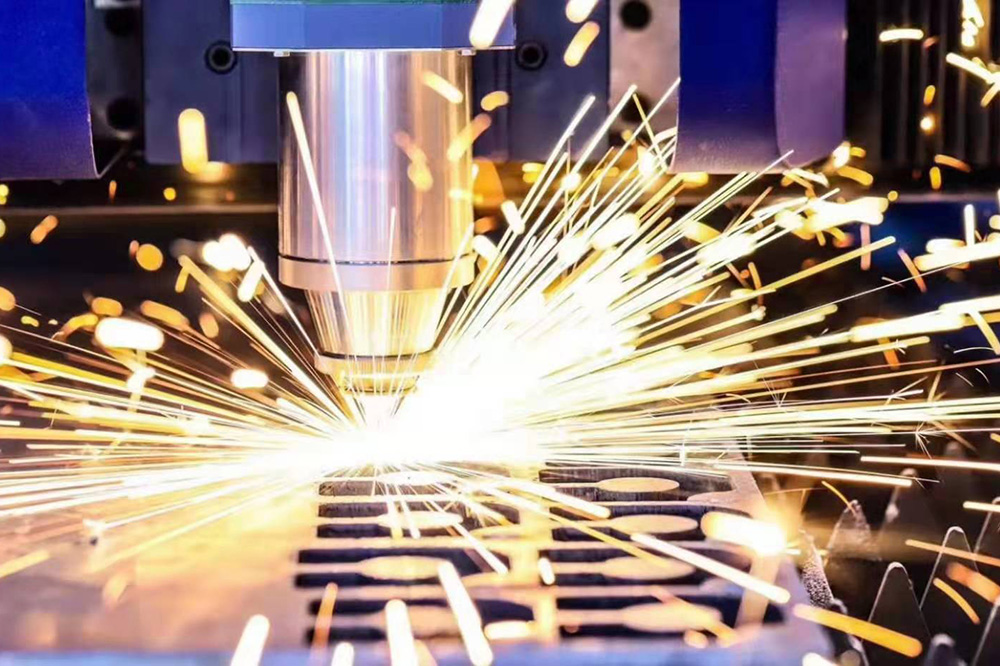
The Laser cutting process uses a highly concentrated laser beam to melt, burn, or vaporize material along a programmed cutting path. The laser head follows digital CAD/CAM data, allowing manufacturers to create precise profiles, holes, slots, and other complex geometries.
Unlike conventional mechanical cutting, laser cutting is a non-contact process. The cutting head does not physically press against the workpiece, which helps reduce mechanical deformation and eliminates many issues associated with cutting-tool wear.
A typical Laser cutting process involves:
The effectiveness of the process depends not only on laser power but also on material properties, machine condition, programming, parameter optimization, and operator experience.
One of the most important advantages of the Laser cutting process is its ability to produce accurate and repeatable parts.
Because the laser is controlled through CNC programming, the machine can follow complex CAD-defined contours with high consistency. This makes the technology particularly suitable for components requiring precise dimensions and repeatable geometry.
Typical applications include:
For OEM customers, repeatability is especially important. A component that is accurate once but inconsistent across hundreds of pieces can create assembly problems and increase rejection costs.
A well-controlled Laser cutting process helps ensure that production parts remain consistent from the first batch to subsequent orders.
Traditional cutting methods often involve direct mechanical contact between the tool and workpiece. Depending on the material and geometry, this can introduce mechanical forces that may affect thin or delicate components.
The Laser cutting process is fundamentally different because it is non-contact.
This can help reduce:
The laser concentrates energy into a relatively small cutting area. When appropriate parameters are used, the resulting heat-affected zone can be controlled, which is particularly useful for precision sheet metal fabrication.
However, laser cutting is still a thermal process. Excessive heat input, incorrect parameters, unsuitable material thickness, or poor machine settings can still affect the part. Therefore, precision depends on process control rather than laser power alone.
Edge quality is another reason manufacturers choose the Laser cutting process.
When laser power, cutting speed, focus position, assist gas, and material thickness are properly matched, laser cutting can produce clean edges with relatively low burr formation.
This can reduce the need for secondary operations such as:
Reducing secondary processing can provide several benefits:
Fewer operations → Lower labor requirements → Shorter production time → More consistent parts
For OEM buyers, this can also simplify the overall manufacturing process.
At the same time, edge quality varies according to material and thickness. Stainless steel, aluminum, carbon steel, and galvanized steel require different cutting strategies. An experienced manufacturer should therefore optimize parameters rather than applying the same settings to every material.
Material cost can represent a significant portion of sheet metal manufacturing expenses.
The Laser cutting process works well with modern CAD/CAM nesting software, allowing multiple components to be arranged efficiently on a sheet.
Good nesting can help:
For large OEM projects, even a small improvement in material utilization can have a meaningful impact on total production cost.
This is particularly valuable when working with higher-cost materials such as stainless steel and aluminum.
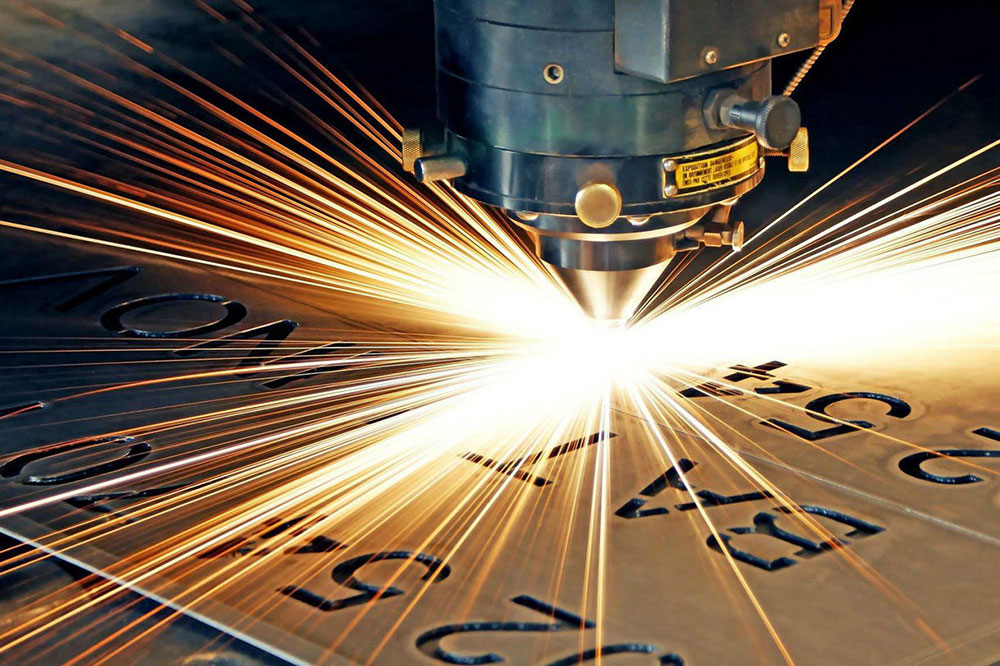
Another major advantage is production flexibility.
Because laser cutting is digitally controlled, design changes can generally be incorporated through updated CAD/CAM files rather than requiring extensive physical tooling changes.
This makes the Laser cutting process suitable for:
Manufacturers can produce prototype components directly from engineering drawings, allowing customers to verify dimensions and assembly before mass production.
For customers requiring customized components in relatively small quantities, laser cutting can provide an efficient solution without complicated tooling requirements.
Different components can be programmed according to individual drawings, making the process well suited to OEM and ODM projects.
Once the cutting program and process parameters have been validated, the same design can be reproduced consistently across larger production batches.
This combination of flexibility and repeatability is one reason laser cutting has become so important in modern sheet metal manufacturing.
The Laser cutting process can be used with a broad range of sheet metal materials.
Common materials include:
However, each material behaves differently during laser cutting.
For example, aluminum has high thermal conductivity and reflects laser energy differently from carbon steel. Stainless steel also requires appropriate cutting parameters to achieve good edge quality.
Therefore, the manufacturer needs to consider:
Choosing the correct combination of these factors is essential for producing stable results.
Laser cutting is often only the first step in a complete manufacturing project.
Many customized components require multiple processes after cutting, such as:
Laser Cutting → CNC Bending → Welding → Grinding → Surface Treatment → Assembly → Inspection
For example, an electrical enclosure may require laser-cut panels, precision bending, welded components, surface treatment, and final assembly.
A supplier capable of integrating these processes can reduce communication complexity and improve production coordination.
This is particularly useful for overseas buyers who prefer working with one manufacturing partner rather than coordinating several independent suppliers.
When sourcing laser-cut components internationally, buyers should look beyond machine specifications.
A manufacturer may own a high-power laser machine but still struggle to provide consistent production quality.
Before selecting a supplier, consider:
Check whether the supplier has equipment appropriate for your material, thickness, part size, and production volume.
The supplier should understand drawings, tolerances, material requirements, and manufacturing constraints.
A reliable supplier should have appropriate dimensional inspection and quality-control procedures.
If your project requires bending, welding, surface treatment, or assembly, integrated manufacturing capability can simplify the supply chain.
Stable scheduling, traceability, material management, and communication are important for repeat OEM production.
The best Laser cutting process supplier is therefore not necessarily the one with the highest laser power. It is the one that can consistently turn your drawings into qualified production parts.
SHENGWO MACHINERY provides customized sheet metal fabrication for international OEM customers.
Our laser cutting capability includes 3000W and 6000W fiber laser cutting machines, supporting materials such as Q235 carbon steel, stainless steel 304, and aluminum 5052.
For suitable material ranges, our equipment can achieve approximately:
Actual achievable tolerances depend on material, thickness, geometry, machine condition, and drawing requirements.
More importantly, laser cutting is integrated with our broader manufacturing capabilities, including:
This allows SHENGWO MACHINERY to support customers from drawing review to finished components.
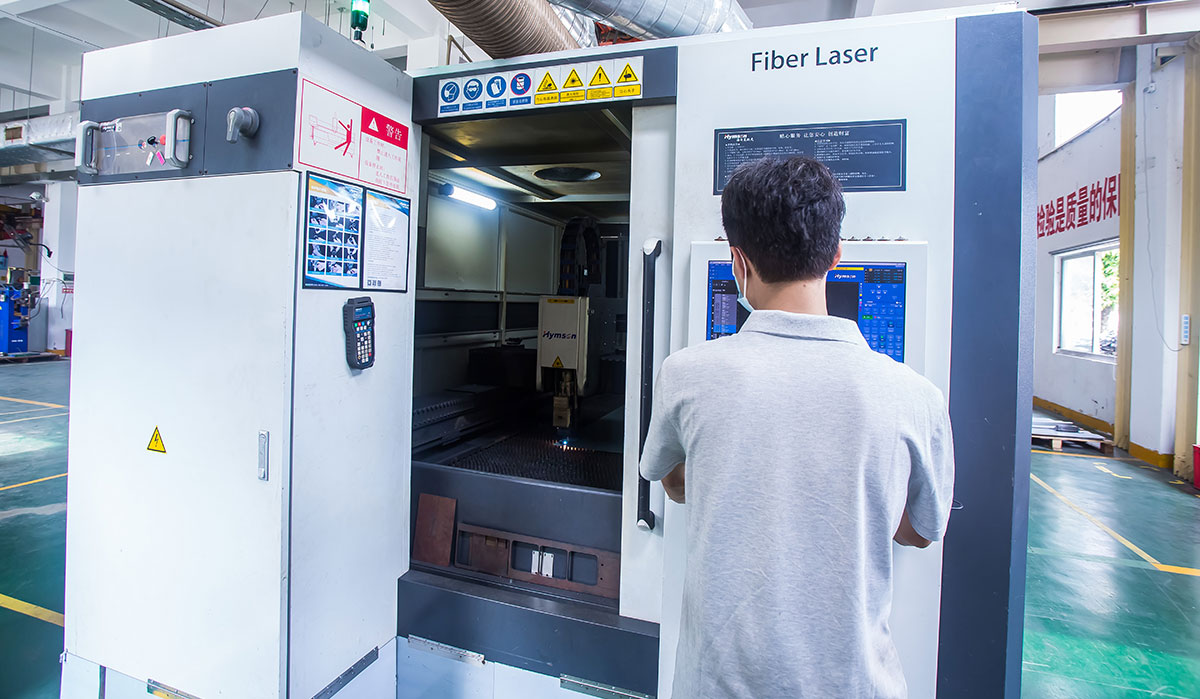
For overseas buyers, manufacturing reliability is about more than equipment.
SHENGWO MACHINERY focuses on combining equipment, engineering capability, process control, and quality management to provide stable manufacturing solutions.
Our company operates under:
Both management systems are certified by a UKAS-accredited certification body.
SHENGWO MACHINERY has also received recognition associated with the Schneider Electric supply chain, including:
These recognitions support our commitment to quality management, continuous improvement, and responsible manufacturing.
For global OEM customers, our goal is not simply to provide laser-cut parts. We aim to become a reliable manufacturing partner capable of supporting projects from initial drawings through production and delivery.
What materials can the Laser cutting process handle?
Common materials include carbon steel, stainless steel, aluminum, and galvanized steel. The suitable material thickness depends on the laser equipment and specific cutting requirements.
Is laser cutting more accurate than traditional cutting?
Laser cutting can provide high dimensional accuracy and repeatability, particularly for CNC-controlled sheet metal profiles. Actual accuracy depends on material, thickness, machine condition, geometry, and process parameters.
Does laser cutting require secondary processing?
Not necessarily. Properly optimized laser cutting can produce clean edges with relatively low burrs. However, some applications may still require deburring, grinding, bending, welding, or other secondary processes.
Can laser cutting be used for customized OEM parts?
Yes. Laser cutting is particularly suitable for customized parts because production programs can be generated directly from customer CAD drawings.
Can SHENGWO handle processes after laser cutting?
Yes. SHENGWO MACHINERY can integrate laser cutting with CNC bending, welding, surface treatment, assembly, and inspection according to project requirements.
The Laser cutting process has become a preferred choice for high-precision manufacturing because it combines accuracy, repeatability, speed, flexibility, and efficient material utilization.
However, equipment alone does not guarantee reliable results. Consistent production also requires appropriate material selection, optimized cutting parameters, experienced engineers, effective quality control, and stable manufacturing processes.
For global OEM buyers, selecting the right manufacturing partner can make a significant difference in product quality, production efficiency, and long-term project reliability.
At SHENGWO MACHINERY, we combine fiber laser cutting with complete sheet metal fabrication capabilities to help customers transform engineering drawings into reliable, production-ready components.
Have a custom sheet metal project?
Send us your 2D drawings, 3D STEP files, material specifications, quantities, and tolerance requirements.
No. 8803 Zhuhai Road, LianWan Industry Park, Jinwan District, 519090 Zhuhai, Guangdong, China