
Today’s manufacturing environment requires more than simple metal processing. A professional sheet metal manufacturer integrates advanced technology, digital engineering tools, and strict quality management systems to deliver high-precision fabrication solutions. By combining technical expertise with efficient production processes, manufacturers can transform complex designs into durable metal components that meet strict industrial standards.
Zhuhai Shengwo Machinery Technology Co., Ltd. has developed a strong reputation as a reliable manufacturing partner for global companies. As a Schneider Electric SAM-certified green supplier and a partner of Fortune 500 enterprises, the company provides advanced fabrication solutions and supply chain services for industries such as automotive manufacturing, medical equipment, telecommunications, cloud computing infrastructure, industrial automation, consumer electronics, and retail systems.
This article provides an in-depth overview of modern fabrication processes, the technologies used by professional manufacturers, and the factors businesses should consider when choosing a trusted sheet metal manufacturer for long-term cooperation.
Contents
- 1 Why Choosing the Right Sheet Metal Manufacturer Matters
- 2 Technologies Used by a Sheet Metal Manufacturer
- 3 Laser Cutting Technology in a Sheet Metal Manufacturer
- 4 CNC Bending Capabilities of a Sheet Metal Manufacturer
- 5 Welding and Assembly in a Sheet Metal Manufacturer
- 6 Custom Fabrication Services from a Sheet Metal Manufacturer
- 7 Industries Supported by a Sheet Metal Manufacturer
- 7.1 Automotive Industry Applications of a Sheet Metal Manufacturer
- 7.2 Medical Equipment Applications of a Sheet Metal Manufacturer
- 7.3 Telecommunications Infrastructure and Sheet Metal Manufacturer Solutions
- 7.4 Cloud Computing Infrastructure and Sheet Metal Manufacturer Fabrication
- 7.5 Industrial Automation Systems and Sheet Metal Manufacturer Manufacturing
- 8 Quality Control in a Sheet Metal Manufacturer
- 9 How to Select the Right Sheet Metal Manufacturer
- 10 Conclusion
- 11 FAQ – Sheet Metal Manufacturer
Why Choosing the Right Sheet Metal Manufacturer Matters
In industrial manufacturing, precision and consistency are essential. Many mechanical systems rely on metal components that must fit perfectly with other parts in order to function correctly. Even small deviations in fabrication can cause assembly issues, equipment malfunction, or product reliability problems. For this reason, companies rely on a professional sheet metal manufacturer to produce components that meet exact technical specifications.
A reliable manufacturing partner offers several advantages. First, experienced engineers can help improve product design by recommending suitable materials and fabrication methods. This collaborative approach helps reduce production costs while maintaining structural strength and product durability.
Second, advanced manufacturing equipment ensures consistent production quality. Automated cutting and forming systems allow manufacturers to produce large quantities of parts with minimal variation. Businesses that rely on stable supply chains benefit from working with a sheet metal manufacturer that maintains strict production standards.
Third, a professional fabrication company can provide scalable manufacturing solutions. Companies often begin with prototype development and gradually move toward larger production volumes. A capable manufacturer can support each stage of this process, ensuring consistent quality throughout the entire production lifecycle.
By building long-term relationships with experienced fabrication partners, companies gain access to technical expertise that improves efficiency, reduces manufacturing risk, and accelerates product innovation.
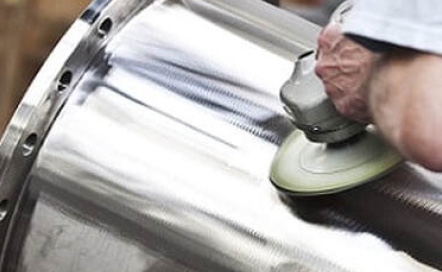
Technologies Used by a Sheet Metal Manufacturer
Modern fabrication companies rely on advanced production technologies to achieve high levels of accuracy and efficiency. These technologies allow manufacturers to produce complex metal components while maintaining strict quality standards.
Laser Cutting Technology in a Sheet Metal Manufacturer
Laser cutting is one of the most widely used fabrication processes in modern manufacturing. A professional sheet metal manufacturer uses high-powered laser beams to cut metal sheets with exceptional precision. The process allows manufacturers to create complex shapes with clean edges and minimal material distortion.
Computer-controlled cutting programs guide the laser beam along precise paths based on digital design files. This allows fabrication companies to transform engineering drawings into finished components quickly and accurately. Components such as equipment housings, structural brackets, and metal panels are commonly produced using this method.
Another advantage of laser cutting is production efficiency. Automated cutting systems allow manufacturers to process large volumes of material with consistent results. The technology also supports rapid prototyping, enabling engineers to test design modifications before full production begins.
Through advanced laser cutting equipment, a modern sheet metal manufacturer can produce complex components with exceptional precision and repeatability.
CNC Bending Capabilities of a Sheet Metal Manufacturer
Bending is another essential process in metal fabrication. During this stage, metal sheets are formed into specific shapes using controlled pressure. A skilled sheet metal manufacturer uses CNC bending machines to ensure that each part maintains accurate angles and dimensions.
CNC technology allows bending machines to follow digital instructions generated from engineering designs. This ensures consistent results across production batches and reduces the likelihood of manual errors. Accurate bending is particularly important for components that must fit precisely within larger assemblies.
Products such as machine frames, control cabinets, and industrial enclosures often require multiple bending operations. Advanced equipment allows manufacturers to create complex shapes while maintaining structural strength and material integrity.
These capabilities enable fabrication companies to produce reliable structural components for demanding industrial applications.
Welding and Assembly in a Sheet Metal Manufacturer
Many fabricated metal components must be joined together to form larger structures. Welding is the primary method used to create these connections. A professional sheet metal manufacturer provides several welding techniques depending on the materials and structural requirements involved.
Common welding methods include MIG welding, TIG welding, and robotic welding systems. Each technique offers advantages in terms of precision, speed, and structural strength. Experienced technicians ensure that welded joints meet engineering requirements and maintain long-term durability.
In addition to welding, some manufacturers offer assembly services that combine multiple fabricated parts into finished structures. These services simplify production processes for customers by reducing the number of suppliers required in the manufacturing chain.
By providing integrated fabrication and assembly solutions, a full-service sheet metal manufacturer helps businesses streamline production and improve operational efficiency.
Custom Fabrication Services from a Sheet Metal Manufacturer
Customization is a key advantage offered by modern fabrication companies. Many industries require specialized metal components designed specifically for their equipment and production systems. A professional sheet metal manufacturer works closely with customers to transform technical drawings into practical fabrication solutions.
Custom products can include:
-
Industrial equipment housings
-
Machine frames and structural supports
-
Electrical control cabinets
-
Robot workstation enclosures
-
Safety guards and protective panels
-
Laser-cut structural parts
Each product requires careful consideration of materials, structural design, and manufacturing processes. By collaborating with customers during the design stage, fabrication specialists can recommend improvements that enhance performance and reduce manufacturing costs.
Companies seeking reliable custom fabrication services can explore additional capabilities through the following page:https://www.zhswjx.com/
This page provides further information about production processes, manufacturing technologies, and engineering support services.

Industries Supported by a Sheet Metal Manufacturer
Fabrication companies serve a wide range of industries that rely on precision metal components. Each industry has specific requirements for material selection, production methods, and quality standards.
Automotive Industry Applications of a Sheet Metal Manufacturer
Automotive manufacturing requires numerous metal components used in vehicle structures, mounting brackets, and equipment housings. Fabrication specialists produce these components with precise tolerances to ensure proper assembly and performance.
Medical Equipment Applications of a Sheet Metal Manufacturer
Medical devices often require metal enclosures that protect electronic systems and maintain structural integrity. These components must be produced with high accuracy to meet strict regulatory standards.
Telecommunications Infrastructure and Sheet Metal Manufacturer Solutions
Telecommunications equipment requires durable cabinets and protective housings that shield sensitive electronics from environmental factors. Fabrication companies produce these structures with corrosion-resistant materials and precise dimensions.
Cloud Computing Infrastructure and Sheet Metal Manufacturer Fabrication
Data centers rely on strong metal frameworks such as server racks and storage cabinets. These structures must support heavy equipment while maintaining airflow and structural stability.
Industrial Automation Systems and Sheet Metal Manufacturer Manufacturing
Automation systems depend on machine frames, safety enclosures, and protective panels. Fabricated metal components ensure the structural reliability required for continuous industrial operation.
By serving multiple sectors, a skilled sheet metal manufacturer demonstrates the ability to adapt fabrication processes to a wide range of technical requirements.
Quality Control in a Sheet Metal Manufacturer
Quality assurance is an essential part of modern manufacturing. A reliable sheet metal manufacturer implements strict inspection procedures to ensure that fabricated components meet required specifications.
Quality control typically includes several stages. Raw materials are inspected before production begins to confirm that they meet required material standards. During fabrication, technicians verify dimensions and tolerances using precision measuring tools. Welding operations are inspected to ensure structural strength, and surface finishing is checked to maintain product appearance and durability.
Before shipment, finished components undergo final inspection to confirm that all specifications have been met. These procedures help ensure consistent product performance and prevent manufacturing defects from reaching customers.
Companies that maintain strict quality control systems are better positioned to serve international clients and meet global manufacturing standards.
How to Select the Right Sheet Metal Manufacturer
Choosing the right fabrication partner requires careful evaluation of several factors. Businesses should consider technical capabilities, production capacity, and industry experience when selecting a manufacturing partner.
Important evaluation criteria include:
Manufacturing Technology
Advanced production equipment ensures higher precision and improved production efficiency.
Engineering Expertise
Experienced engineers can assist with design optimization and product development.
Quality Management Systems
Manufacturers that follow recognized quality standards provide more reliable production results.
Production Capacity
A capable partner should be able to support both prototype development and high-volume production.
Industry Experience
Companies with experience across multiple industries often have stronger technical knowledge and problem-solving capabilities.
By evaluating these factors, businesses can identify a manufacturing partner capable of supporting long-term production needs.
Conclusion
Precision fabrication plays an essential role in modern industrial manufacturing. Advanced processes such as laser cutting, CNC bending, welding, and assembly allow manufacturers to produce durable components that meet strict engineering requirements.
Zhuhai Shengwo Machinery Technology Co., Ltd. combines advanced production equipment, strong engineering expertise, and strict quality control systems to provide reliable fabrication services for global industries. With experience serving sectors such as automotive manufacturing, medical equipment, telecommunications infrastructure, and industrial automation, the company continues to deliver customized manufacturing solutions that support innovation and product development.
If your company is looking for a reliable fabrication partner capable of delivering precision metal components and professional engineering support, our team is ready to assist.
Contact us today to discuss your project requirements and discover how our manufacturing expertise can support your next product development project.
FAQ – Sheet Metal Manufacturer
What does a sheet metal manufacturer do?
A fabrication company produces metal components using processes such as cutting, bending, welding, and assembly to create structural parts for industrial applications.
What materials are commonly used in sheet metal fabrication?
Common materials include stainless steel, aluminum, carbon steel, and galvanized steel. Each material offers different strength and corrosion-resistance properties.
Can manufacturers produce custom parts?
Yes. Most fabrication companies provide customized production based on engineering drawings, prototypes, or product specifications.
How is product quality ensured during fabrication?
Quality control procedures include raw material inspection, dimensional measurement, welding inspection, and final product testing.