.png)


Contents
When selecting a manufacturing supplier, customers typically compare price, equipment capabilities, and lead time. However, for precision sheet metal parts, fabricated metal structures, damper components, and assembled products, the factor that truly determines whether cooperation can continue over the long term is the supplier’s ability to manage the entire project process.
Completing the manufacturing work does not mean that the project is finished. A delivery is only truly complete when the customer’s technical requirements have been correctly understood, the production process is effectively controlled, quality results can be verified, the relevant documents are complete and traceable, and the products arrive safely at the customer’s site.
True manufacturing capability is not simply the ability to produce a product. It is the ability to effectively manage the entire process—from project coordination and engineering to manufacturing processes, quality, and delivery.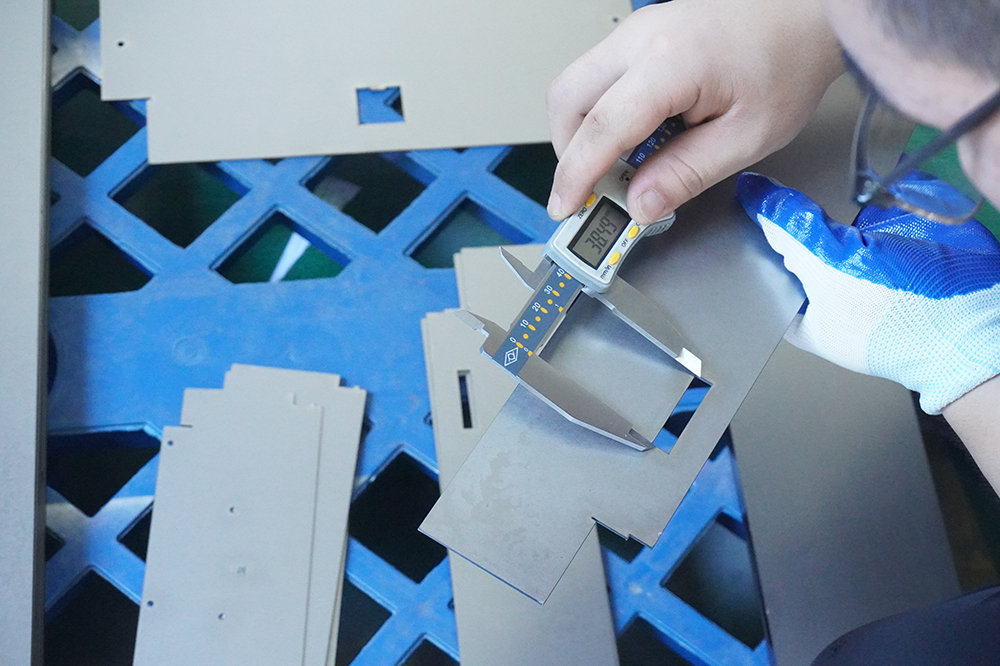
Equipment determines what a factory is capable of manufacturing. Management determines whether the factory can consistently produce it to the required standard.
For build-to-print projects, reliable delivery usually includes the following:
Accurately understanding drawings and technical requirements;
Identifying structural and manufacturing risks in advance;
Establishing a clear and executable process route;
Controlling quality variation during production;
Continuously tracking raw materials, production, and outsourced processes;
Handling exceptions promptly and maintaining information transparency;
Preparing complete quality and shipping documentation;
Using a packaging solution suited to the product and transportation method.
A loss of control at any stage may affect final product quality, assembly performance, and delivery time. Consistent delivery is therefore not the responsibility of production alone. It is the result of coordinated work among engineering, purchasing, production, quality, project management, and logistics.
There is no universal solution for custom manufacturing. Even products with a similar appearance may have completely different operating environments, material standards, tolerance requirements, surface finishes, and assembly methods.
Before formal quotation or production scheduling, the supplier needs to convert the customer’s requirements into clear and executable manufacturing specifications. Key points to confirm include:
Product application and actual operating environment;
Material grade, sheet thickness, and applicable material standards;
Product dimensions, critical tolerances, and inspection requirements;
Welding, riveting, or other joining methods;
Surface finish, colour, coating thickness, and appearance requirements;
Product assembly relationships and functional requirements;
Packaging method, transportation conditions, and labelling requirements;
Inspection reports, material certificates, and other documentation requirements;
Sample quantity, production volume, and target lead time.
Any unclear information in the drawings, conflicts between different documents, or details that may affect the manufacturing result should be recorded in a question list and confirmed with the customer.
| Custom manufacturing must not replace technical requirements with assumptions based on experience. The earlier questions are clarified, the lower the risk of rework, delays, and quality disputes later in the project. |
The primary purpose of an engineering review is to move manufacturing risk from the shop floor to the engineering stage.
In addition to determining whether the available equipment can perform the required operations, engineers need to review the following:
Whether the product structure is suitable for volume production;
Whether the material and sheet thickness meet the application requirements;
Whether the flat pattern and bending relationships are reasonable;
Whether there are bending interferences or tooling limitations;
Whether welding is likely to cause deformation;
Whether surface finishing will affect tolerances or assembly;
Whether powder build-up or masking issues may occur during coating;
Whether fasteners, hole positions, and interfaces will match correctly;
Whether the product structure facilitates inspection, packaging, and transportation;
Whether the sample process can be consistently replicated in volume production.
If the product structure or manufacturing process needs to be adjusted, the supplier should explain the reason, impact, and recommended solution to the customer. Controlled drawings or technical documents should only be updated after customer approval.
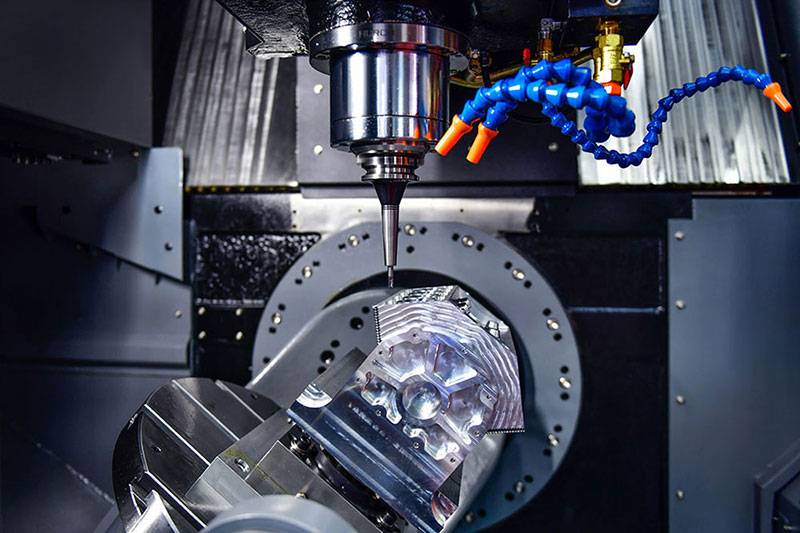
| The first step in manufacturing is not to begin processing immediately, but to understand the product correctly. |
SHENGWO provides laser cutting, bending, stamping, welding, riveting, grinding, precision CNC machining, surface finishing, and product assembly services.
In actual production, every operation affects the result of the next operation.
Laser cutting requires close control of profile dimensions, hole-position accuracy, cut quality, heat effects, and burrs. Assembly holes, locating holes, and cosmetic parts must also be evaluated in relation to subsequent bending, welding, and surface-finishing requirements.
The bending process requires control of angles, flange lengths, bend radii, and the dimensional relationships between multiple bends. The effects of material properties, sheet-thickness variation, springback, and tooling selection on final dimensions must also be considered.
Welding must not only meet structural strength requirements but also control heat input, weld appearance, and product deformation. For enclosures, frames, brackets, and large fabricated structures, the welding sequence should be carefully planned, with fixtures, positioning, and in-process inspections used to reduce accumulated error.
Grinding must balance smooth weld transitions, surface consistency, and dimensional protection. Powder coating, electroplating, and other surface finishes require control of pretreatment, colour, film thickness, adhesion, masking locations, and appearance.
Coated cosmetic parts should also be carefully checked for colour variation, particles, runs, exposed substrate, scratches, and excessive local powder build-up.
Assembly is an important stage for validating the results of preceding operations. Actual assembly makes it possible to verify structural relationships, hole alignment, fastener installation, moving components, interface dimensions, and overall functionality.
A small deviation in an earlier process may be further amplified during welding or assembly. For this reason, consistent technical standards, inspection requirements, and transfer-approval controls must be established between operations.
Reliable lead-time performance is not achieved by checking whether the products are complete shortly before shipment. It requires continuous management of every critical milestone from the moment the order is launched.
Project schedule management normally covers:
Confirmation of drawings and technical requirements;
Raw-material purchasing and arrival status;
Preparation of process documents and the production plan;
Internal operations such as laser cutting, bending, and welding;
Outsourced processes such as powder coating and electroplating;
First article and in-process inspection;
Product assembly and final inspection;
Packaging, documentation, and logistics arrangements;
Estimated completion date and actual shipment date.
If material lead times, technical changes, outsourced processing, or quality exceptions may affect the final delivery date, the impact should be evaluated as early as possible. The customer should be informed promptly, together with an appropriate adjustment or recovery plan.
Schedule transparency does more than tell the customer how far production has progressed. More importantly, it gives both parties time to resolve problems and adjust their plans.
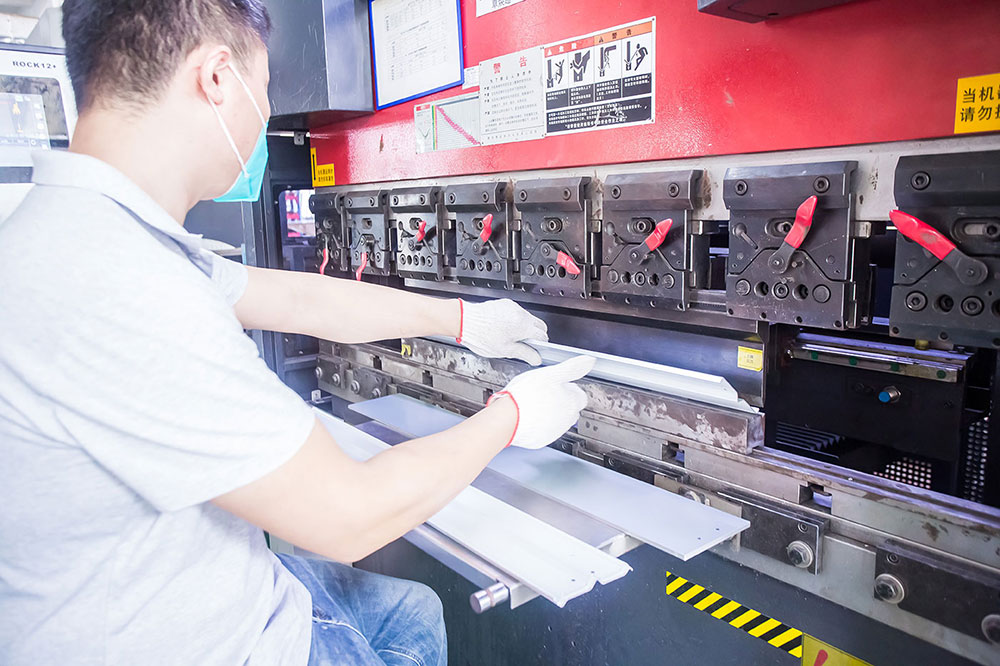
| Reliable lead-time performance is not achieved by waiting for production to finish. It requires continuous management of every production milestone. |
Misinterpretation of drawings, overlooked critical dimensions, welding deformation, unclear surface-finishing standards, and insufficient assembly validation are common risks in custom manufacturing.
Relying solely on final inspection usually identifies only problems that have already occurred. Effective quality management establishes the necessary control points throughout the manufacturing process:
| Raw-Material Verification → First Article Inspection → In-Process Inspection → Critical-Dimension Inspection → Surface-Finish Verification → Assembly Validation → Final Inspection |
The material grade, specification, thickness, and quantity are verified against project requirements. For projects requiring traceability, material certificates and relevant batch information must also be retained.
First article inspection is used to validate machining programs, fixtures, process parameters, dimensions, appearance, and assembly relationships. Volume production can proceed only after the first article has been approved.
Finding and correcting problems at the first article stage is more effective than reworking products after volume production and also reduces quality and delivery risks.
In-process checks should be established according to project requirements for critical dimensions, special processes, and manufacturing stages that are prone to variation. Their purpose is to identify deviations before the problem expands.
When a nonconformity is found, the supplier should not only segregate and handle the affected products but also:
Analyse the cause of the problem;
Confirm the affected product quantity and batches;
Evaluate the impact on quality, assembly, and delivery;
Develop corrective and preventive actions;
Verify that the actions are genuinely effective;
Report to the customer and obtain approval when necessary.
| Inspection can identify problems. Process management reduces them. |
During custom manufacturing, customer drawings, material requirements, production processes, and project schedules may all change.
The purpose of professional communication is not to increase the number of emails or messages. It is to ensure that both parties maintain a consistent understanding of project status, technical requirements, and potential risks.
Reliable project communication should include:
Raising technical questions promptly and recording them in a clear list;
Reporting exceptions promptly without concealment or delay;
Quickly determining the impact of an exception on quality and delivery;
Proactively updating critical production and delivery milestones;
Obtaining written confirmation for changes involving drawings, materials, quantities, or standards;
Ensuring that the latest valid document revision is used on the shop floor.
| Problems themselves are not the greatest concern. What truly affects cooperation is a lack of transparency, unclear responsibility, and delayed action. |
For industrial customers, the product and its documentation together form the deliverable.
Depending on project requirements, the supplier may need to provide:
Dimensional inspection records;
Material certificates;
First Article Inspection (FAI) reports;
Surface-finish or colour approval records;
Product and packaging photographs;
Commercial invoice;
Packing list;
Labels and other shipping documents;
Other quality documentation requested by the customer.
Complete document management improves product traceability and helps the customer with receipt, inspection, warehousing, and subsequent quality management.
Packaging is not a simple additional task before shipment. It is the final stage of product quality control.
The packaging solution should be designed according to the product’s structure, size, weight, surface condition, transportation method, and shipping distance. Key considerations include:
Protecting product surfaces from scratches;
Separating parts from one another;
Protecting edges, corners, and protruding features;
Preventing thin-sheet parts from bending or deforming;
Securing large fabricated structures;
Providing moisture and corrosion protection for sea freight;
Preventing impact damage during repeated handling and loading;
Ensuring the accuracy of outer-package labels and packing information.
For coated cosmetic parts, thin-sheet products, large welded structures, and precision-machined components in particular, the packaging design must fully account for vibration, stacking, humidity, and handling risks during long-distance transportation.
| Producing the product demonstrates manufacturing capability. Delivering it safely to the customer demonstrates delivery capability. |
Understand the product’s application, operating environment, material requirements, structural relationships, assembly method, and quality standards—not merely how to complete an individual process according to a drawing.
Manage engineering reviews, document revisions, process routes, production schedules, quality controls, outsourced operations, and exceptions so that the project remains under control at all times.
Ensure that the products meet the customer’s requirements, quality results can be verified, documentation is complete, packaging is reliable, and delivery is completed according to the schedule agreed by both parties.
Zhuhai Shengwo Machinery Technology Co., Ltd. specialises in build-to-print metal manufacturing and provides customers with one-stop support from engineering review and production to assembly and global delivery.
Our main business areas include:
Precision sheet metal fabrication;
OEM fabricated metal structures;
Custom HVAC dampers and related components;
Electrical enclosures and control panels;
Supermarket shelving and commercial display equipment;
Precision CNC-machined parts;
Stainless-steel cabinets and other custom metal products.
SHENGWO has established ISO 9001 quality and ISO 14001 environmental management systems. The relevant certifications were issued by a UKAS-accredited certification body, and the company has also passed an SGS audit. Through ERP-based digital management, SHENGWO tracks drawing reviews, process preparation, materials, production, quality, and delivery to improve project visibility and product traceability.
According to customer and project requirements, SHENGWO can support inspection records, material certificates, First Article Inspection (FAI) reports, and other quality documents.
Our project execution process is:
| Project Requirement Confirmation → Drawing and Engineering Review → Process Analysis → Sample and First Article Validation → Volume Production → In-Process Quality Control → Final Inspection → Packaging and Global Delivery |
The purpose of this process is to ensure that:
Engineering questions are resolved as far as possible before production;
Process issues are validated during the sample or first article stage;
Quality risks are controlled throughout production;
Project exceptions are reported and handled promptly;
Packaging and delivery risks are closed before shipment.
SHENGWO supports products used in HVAC, industrial automation, medical equipment, electrical systems, communications, cloud computing, retail display, and other industrial applications. For different products and project requirements, we manufacture according to customer drawings and technical standards through close coordination among our engineering, production, quality, and project teams.
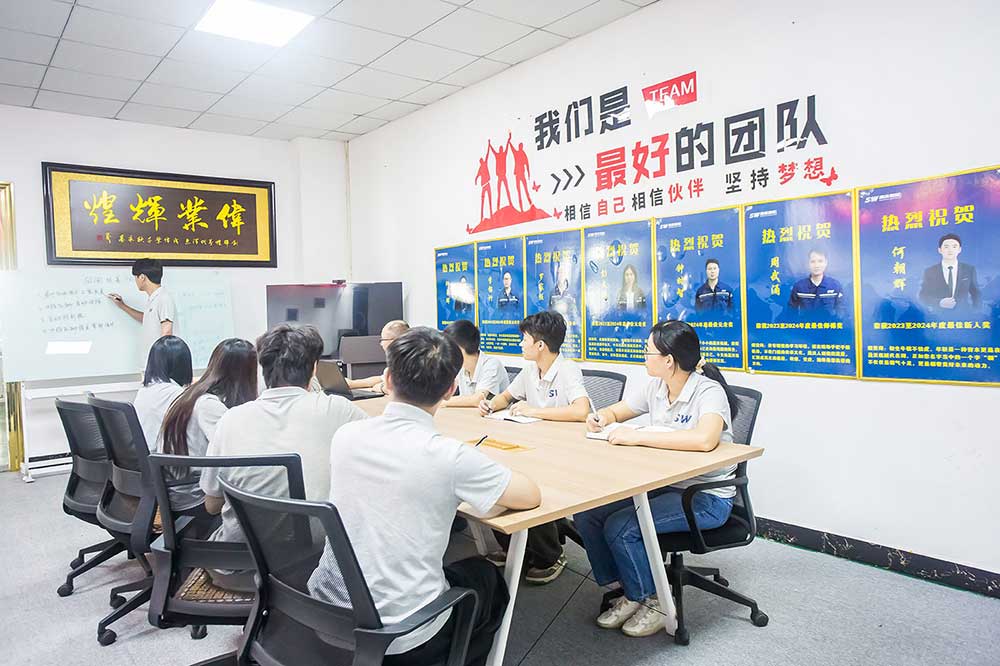
Competition in manufacturing is not limited to price and equipment.
What customers truly need is a manufacturing partner that can accurately understand the product, control the manufacturing process, solve problems promptly, and fulfil its commitments to quality and delivery.
At SHENGWO, every rigorous drawing review, every effective first article validation, every timely project update, and every safe and reliable delivery gradually builds the customer’s trust in us as a supplier.
| One project builds trust; consistent delivery creates long-term value. |
Sharing manufacturing experience, reducing project risk, and achieving consistent
manufacturing and reliable delivery.
SHENGWO Manufacturing Insights | Your Reliable Manufacturing Partner
No. 8803 Zhuhai Road, LianWan Industry Park, Jinwan District, 519090 Zhuhai, Guangdong, China